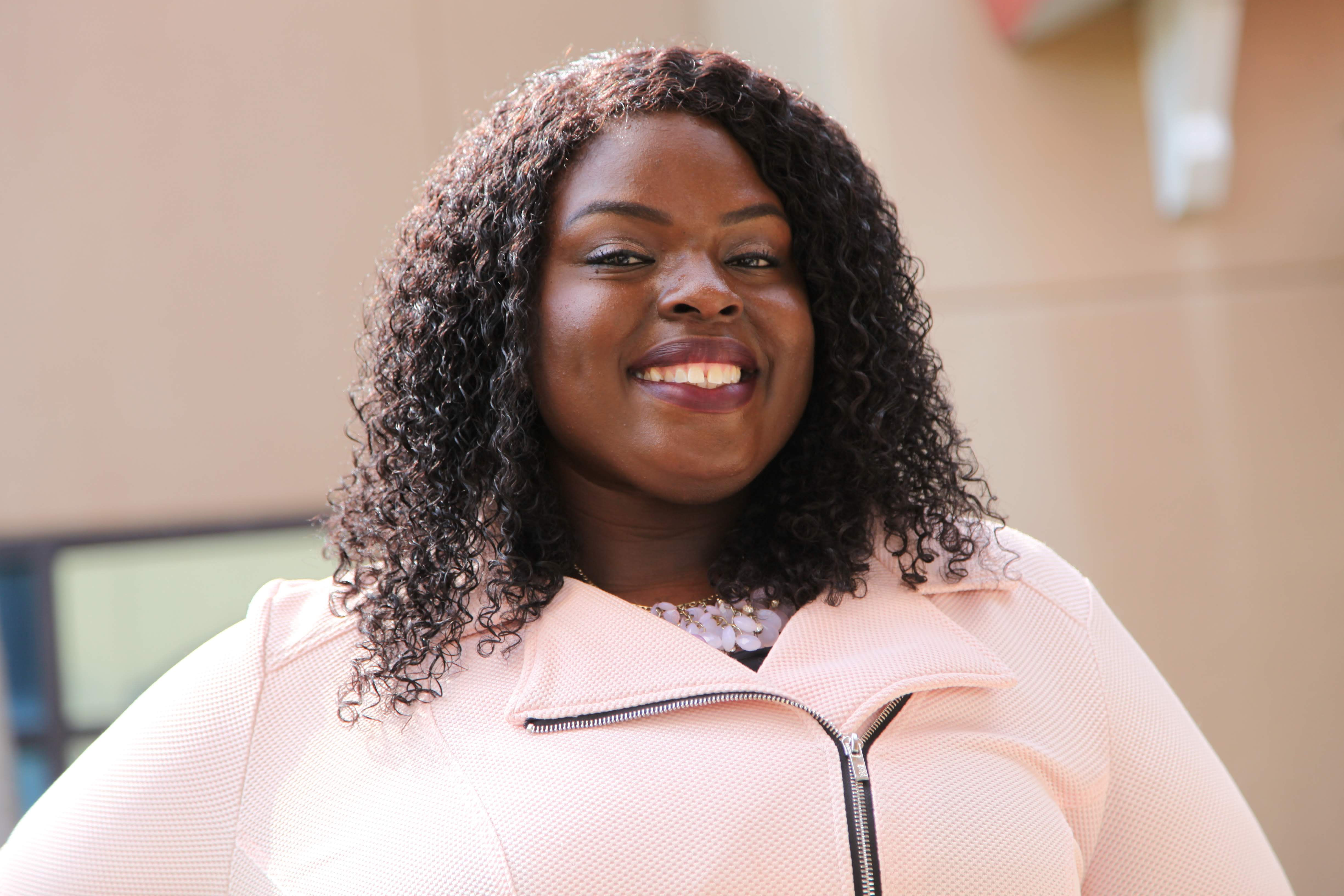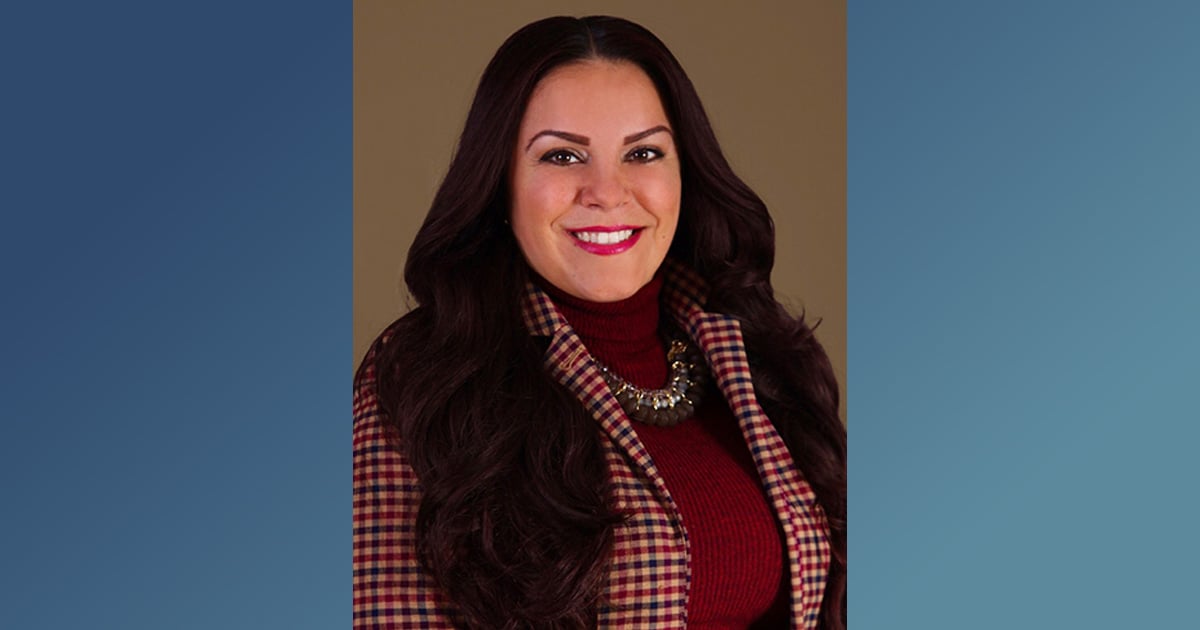
When Reda Taleb (McLean Class, 2015) talks about “giving back,” she isn’t just reciting a slogan — she’s living by example. The daughter of immigrants from Bint Jbeil, Lebanon, Taleb’s parents, along with her six older siblings, laid roots in Dearborn’s south end, an area known for its pollution-emitting factory smoke stacks and community of Arab Americans seeking the “American Dream.”
A first-generation college graduate, Taleb had a front-row view of the American promise, her upbringing shaped everything that followed: a legal career grounded in de-incarceration advocacy, two national book tours bringing healing to families impacted by incarceration, and a daily practice of service that starts on the blocks she calls home.
Taleb’s recent recognition as Distinguished Alumni of the Year by the University of Michigan-Dearborn felt less like a personal trophy and more like a community milestone.
“This award belongs to my entire family,” Taleb said. She honors her parents’ courage in fleeing civil war and starting over in a blue-collar Detroit suburb.
Professionally, she’s quick to extend the credit further, to “the extraordinary human beings and proximate leaders” she serves alongside nationwide. That humility isn’t a pose — it’s the backbone of her work.
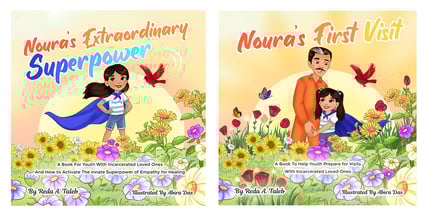
Taleb is best known nationally for her de-incarceration advocacy and her children’s series, “Ordinary People With Extraordinary Superpowers,” which focuses on the experiences of justice-impacted youth. The project was born of lived experience and a conviction that those closest to harm must drive the solutions.
 “My own family’s lived experience with parental incarceration was the main inspiration. It has defined my deep belief in proximate leadership, which means that people who are closest to the policies negatively impacting their lives must drive the solutions needed to mitigate the harmful impact of those policies,” she said.
Taleb says that the loss of community resources is especially apparent in children of incarcerated parents who suffer from adverse childhood experiences as they endure perplexing threats to their emotional, physical, educational, and financial well-being. For so many of us, it’s a miracle to transcend the compounded set of barriers we face from all aspects of life.
Taleb decided to write the books she wished she’d had as a child. Her book series, centering on a resilient Arab American, named Noura, whose family is also Muslim, meets children where they are — with honest language about separation, shame and hope; with family, culture and faith fully visible; and with a steady insistence on dignity.
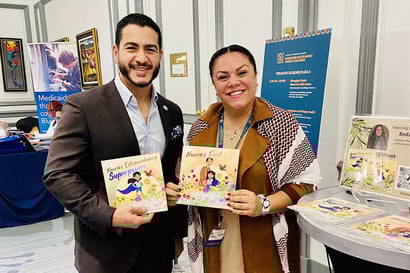 Since launching the series in December 2022, Taleb has taken the stories to schools, libraries, justice centers, and the National Education Association’s Minority Leadership and Women’s Leadership Seminars to Advance Racial and Social Justice for thousands of educators across the U.S.
“It’s not just individual healing,” Taleb said. “It creates a ripple of community care.”
Taleb’s passion for advocacy began while she was a Cooley student and learned about a Zoning Board of Appeals variance request in her Dearborn neighborhood. Upon organizing immigrant neighbors — many with limited English — they challenged the variance that allowed harmful operations on their street and won.
“I’ll treasure that memory for a lifetime, knowing my legal education helped improve the quality of life for families who will grow up on that block,” she said.
A few years after advocating for her own community, she came across an NPR article entitled, “The American Dream: One Block Can Make All The Difference,” which helped realize the importance that local advocacy. This helped her feel vindicated in the work she did.
“I recall reading the first line, ‘Block by block, the place you were born and raised, can determine how far you get ahead in life,’ and immediately feeling how true that was for so many families in my community,” said Taleb. “I couldn't help but think about the lower quality of life my siblings endured.”
Taleb’s local-first orientation now informs her national work with coalitions like Close Rikers and the See Us, Support Us (SUSU) network.
“We need to end harmful systems, defend the rights of people still inside, and reinvest in what creates real safety — housing, health care, education and employment,” Taleb said. “Someone reentering after time in Rikers faces the same barriers as someone reentering in Michigan. It’s systemic.”
That’s why she champions policy changes close to home, too — lifting up efforts like Michigan’s Fair Chance to Housing Access Act to remove unreasonable barriers for returning citizens.
Her framing — “less cages and more community care” — is both pragmatic and profoundly hopeful. It insists that safety is not the absence of people society has discarded; it’s the presence of what we all need to thrive.
Trailblazing comes with joy and pressure, and Taleb carries both with grace. Teachers and mentors “expected excellence” from her early on, she said, even when circumstances might have suggested otherwise.
She sees mentorship not as charity but as obligation. And it’s why her definition of giving back is concrete: invest time, create opportunities and serve the greater collective good.
“These interconnected issues anchor my focus and provide direction for how to drive positive change locally,” she said.
Taleb believes Cooley has provided her with the legal tools that empowered her environment and access to internships, and prepared her for her work. She continues to stay connected by mentoring prospective law students — especially first-generation and justice-impacted students who need to see what’s possible.
Her advice to current students dreaming of impact is simple and bracing.
“If traditional pathways don’t fit, create your own after law school,” Taleb said. “Show up authentically, stay rooted in your principles and use your legal training in service of community.”
Taleb’s horizon is long. She recently announced the Mariam and Reda Taleb Scholarship, launching in fall 2026 at her undergraduate alma mater, to support first-generation students. And the final book in her children’s series arrives in April 2026, extending the work of healing and representation she’s already set in motion.
Asked what she hopes her legacy inspires, Taleb doesn’t hesitate: a deeper belief in redemption.
“People who make mistakes and become incarcerated, along with their families, are worthy of reentering our communities — and of receiving the community care that helps them blossom into their greatest potential,” she said.
This article also appears in the Winter 2025 issue of Benchmark Magazine.